The Myths of Herakles as a Fighter – PDF

Grollios, A. D. “The Myths of Herakles as a Fighter.” Master’s thesis, University of Glasgow, 1984.

(Free PDF link above)

Thank you: I’m incredibly grateful to the University of Glasgow Library for scanning a physical copy of the thesis since the PDF I originally purchased from Proquest was flawed.

Summary

The present work examines the myths of Herakles as fighter, which are the myths where the hero appeared to confront a single opponent other than an animal or a monster. Those opponents are distinguished into Deities and Humans and the stories which narrate the fights of Herakles against them are classified accordingly into separate chapters in alphabetical order. A further distinction is made as regards the way the fights of Herakles were conducted: some of them involved the use of weapons but others were unarmed contests, almost exclusively wrestling matches. There is also a third chapter, which includes certain stories in which Herakles appeared to kill someone without a confrontation; those are called Killings and examined here because they still present the hero attacking a single individual. The stories under examination are reviewed as they appear in the sources; whenever the latter provide more than one versions [sic], those are all cited, irrespectively of their estimated validity. There follows an examination of various elements which are considered important in the stories, such as the way the contest between Herakles and his opponent was fought, the weapons which were possibly used, the result of the fight and its nature (whether a contest for a prize or a mere robbery, for example). The examination of all those myths where Herakles appears to fight a single individual leads to the conclusion that a significant number of Herakles’s opponents were either water-deities or descendants of Poseidon, the water-deity par excellence. That is taken to signify that Herakles should be ultimately considered a figure who is fundamentally opposed to water, a hero mostly suited to a non sea-faring people.

Grollios (1984) analyses this sixth-century BCE hydria featuring Heracles (standing) wrestling with Antaios (laying), while the gods watch (48). Image found here. The original watermarks have been removed, but this was only done so visitors could have an unobstructed view. This is for personal use only.

Heracles Contradictions

Here is a list of some of the Son of Zeus’ contradictions:

[G. S.] Kirk provides a useful summary list of some important contradictions:

humane [<–>] bestial
serious [<–>] burlesque
sane [<–>] mad
salutary [<–>] destructive
free [<–>] slave
human [<–>] divine

(to which Nicole Loraux adds

virile [<–>] feminine) (Lawson, 1993, 116-117)

Bibliography:

Lawson, Pamela Jane. “The Iconography of Herakles and the ‘Other’ in Archaic Greek Vase Painting.” PhD diss. Harvard University, 1993.

Hercules in Ibero-American Myth, History, and Art / Hércules en el mito, la historia y el arte iberoamericano – PDF

Note: My blog is not monetized. The media below has been posted for educational purposes only. If you enjoyed this version, please, please, please support the official release.

Pérez, José Luis, Varela, Sergio González, & Souberville, J. Armando Hernández, eds. Hércules en el Mito, la Historia y el Arte Iberoamericano. Relatos de una figura de poder y dominación [Hercules in Ibero-American Myth, History, and Art: Tales of a Figure of Power and Domination]. Mexico: El Colegio de San Luis – Universidad Iberoamericana, 2015.

(Free PDF link above)

The Herakles Theme – PDF

Last updated: 01-03-2026

Note: My blog is not monetized. The media below has been posted for educational purposes only. If you enjoyed this version, please, please, please support the official release.

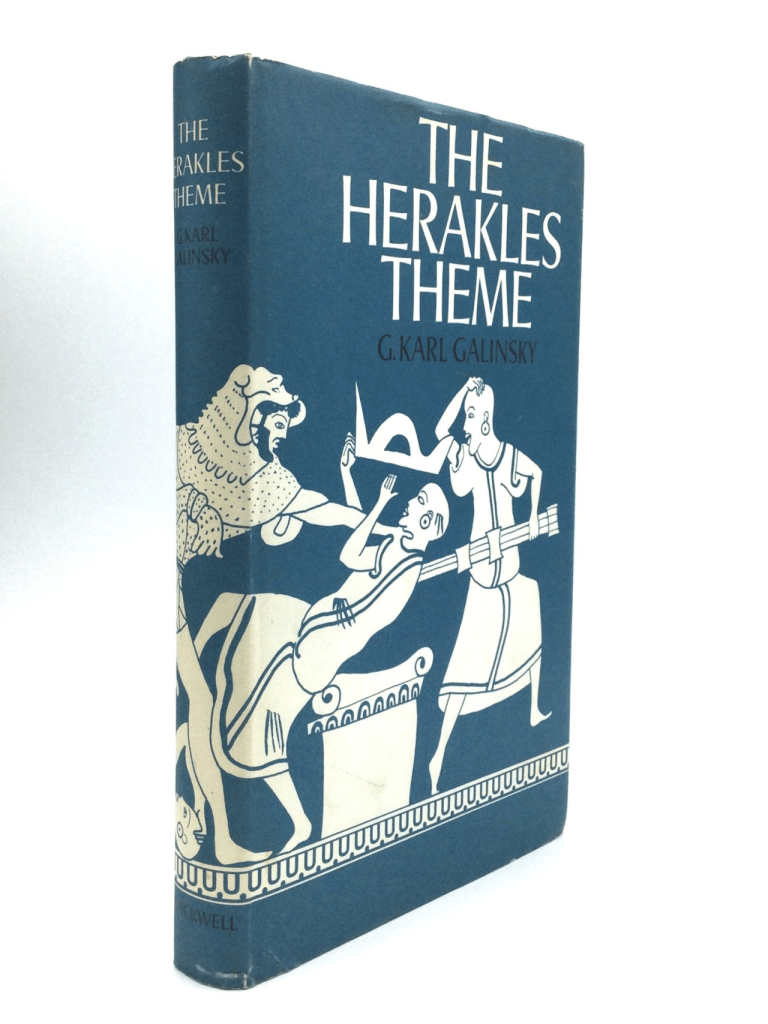
Galinsky, Karl. The Herakles Theme: The Adaptations of the Hero in Literature from Homer to the Twentieth Century. New Jersey: Rowman and Littlefield Publishers, 1972.

(Free PDF link above)

Blurb

Professor Galinsky’s “Herakles Theme” provides a survey both descriptive and analytical, of the most significant adaptations of Herakles in western literature, from Homer to present day, with particular emphasis upon the more original and creative portraits of the hero.

(Image from this listing)


Update: 01-03-26

I just started reading The Herakles Theme (1972), and the author mentions it was influenced by a previous book, so I figured I would add it here as well.

Stanford, W. B. The Ulysses Theme: A Study in the Adaptability of a Traditional Hero. 2nd ed. The University of Michigan Press, 1968.

(Free PDF link above)

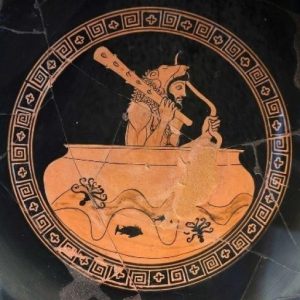
(Image found here.)

Great Ancient Greco-Roman Art Resource

While reading a PhD dissertation, I was pleasantly surprised to learn about the Lexicon Iconographicum Mythologiae Classicae (“Iconographic Lexicon of Classical Mythology”; a.k.a. LIMC; 1981-2009). It is a 16-volume encyclopedia of ancient Greek, Roman, and Etruscan art showcasing historical examples for each deity. The books cover gods alphabetically, starting with “Atherion-Eros” and ending with “Thespiades-Zodiacus.”

(Image found here)

The tomes are presented in pairs of eight matched volumes, the first comprising articles describing the art and the second with pictures.

I would LOVE to get physical copies, but they are very expensive. Thankfully, there are options. First, black and white PDFs of the full series are available on Internet Archive. (See below for a screenshot of a couple of pages (of many) focusing on Heracles.)

https://archive.org/details/limc_20210516/Lexicon%20Iconographicum%20Mythologiae%20Classicae/LIMC%20I-1/

And second, there is a searchable website.

https://app.dasch.swiss/project/BRwvcfLLT72IN-fXzQkrdQ/data

Admittedly, though, I would rather flip through pages of the physical books.